
Bunions and bent toes
Readers ask about bunions and bent toes in a sequence: what is the lump, why did it form, can it be treated without surgery, and what does an operation involve. The nine answers below follow that sequence and then turn to the toes that curl.
Two publishers describe what to look for. Cleveland Clinic says: "Bunions can push your toes out of alignment and put extra pressure on them." The NHS adds: "The main symptoms of bunions are hard lumps on the sides of your feet, by your big toes."
Bunion causes, treatment and surgery
- Why do bunions form in the first place? is the cause question.
- Can you get a bunion on the pinky toe side? answers a reader whose lump is on the outer edge.
- Can a bunion be fixed without an operation? sets out the options short of surgery.
- What is Lapiplasty bunion correction? names one surgical approach.
- Does bunion surgery through small incisions hurt less? compares incision size and discomfort.
- How long does it take to recover after bunion surgery? is the recovery question.
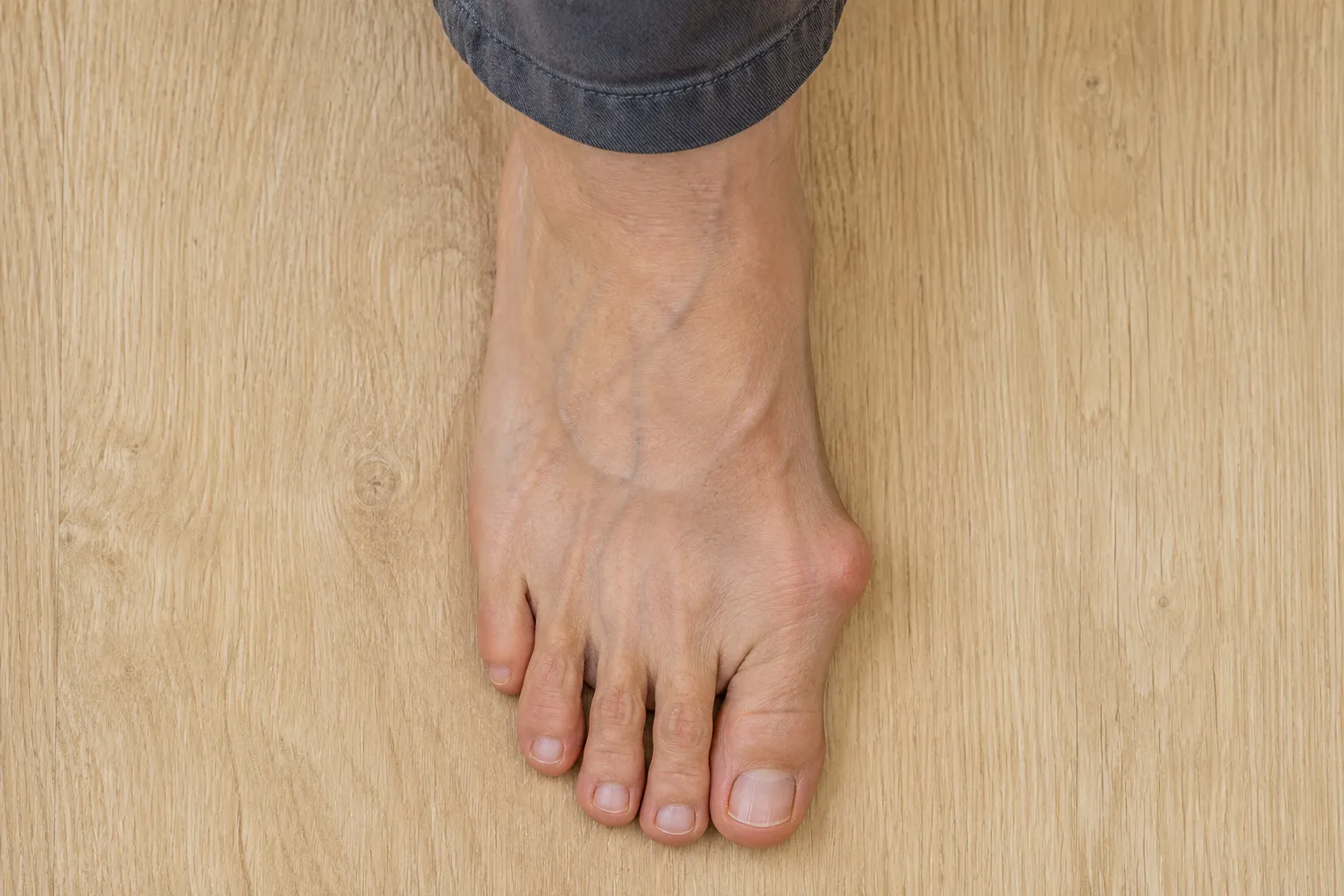
Hammertoes and claw toes
- What is a claw toe? defines the shape.
- How can I tell if my hammertoe is still flexible? is a test a reader can understand before an exam.
- Do hammertoes keep getting worse? asks what the future looks like.
What to have ready
Note which toe is involved, when you first saw the change, and whether the joint hurts in some shoes and not others. Old photos of the foot from earlier years, if you have them, show how far the joint has moved.
For further reading, see Cleveland Clinic's bunion treatment page, the Foot Health Facts entry on bunions, APMA's page on hammer toes, and the report from a UK national hallux valgus think tank.
Where to go next
The next area on the site is ball-of-foot pain, for readers whose toe problem comes with pain under the forefoot.
Every question filed under this topic
- How can I tell if my hammertoe is still flexible?
- Can you get a bunion on the pinky toe side?
- What is Lapiplasty bunion correction?
- What is a claw toe?
- Does bunion surgery through small incisions hurt less?
- How long does it take to recover after bunion surgery?
- Why do bunions form in the first place?
- Can a bunion be fixed without an operation?
- Do hammertoes keep getting worse?